Wedding Flowers by the Season
So, you’re planning your wedding and want to know what flowers are in season and when?
Well, you’re in the right place! This is our guide to seasonal wedding flowers and everything you need to know about what flowers are typically available throughout the year.
Before you dive into the month-by-month guide, there are a few important things to keep in mind.
Seasonal Doesn’t Always Mean Guaranteed
Florists can never guarantee a specific flower type, even if it is typically in season.
Why? Flowers are incredibly weather-dependent. Just because a flower is technically in season doesn’t always mean it will be available. Early frosts, an early summer, pest or disease infestations, and extreme weather can all affect what is available at the time of your wedding.
This is particularly important if you have your heart set on one specific flower.
The In-Between Seasons
The change between seasons can be one of the trickiest times of year for flower availability.
Months like April, September and December are good examples. These months sit right on the edge of a seasonal change, which means you can sometimes find yourself in a bit of a floral limbo.
April is officially autumn, which means most of your summer blooms will likely be finishing. Think dahlias, zinnias, cosmos and similar summer flowers. However, we may not quite be into the full range of autumn and winter blooms either.
You might still get dahlias if the first frost hasn’t arrived, but they may not be at their absolute peak. You could also potentially see cymbidium orchids becoming available, but this would be quite early and would generally mean winter temperatures have arrived sooner than usual.
It can be a tricky time of year if you have very specific flowers in mind.
September is much the same. We are officially out of winter and into spring, but because it is still early in the season, some spring flowers may not be ready yet, while some winter flowers may still be hanging around — unless an early burst of heat arrives.
Again, it can be a difficult time of year if you have specific flowers in mind. If you want spring flowers, we recommend looking at peak spring through to early summer, rather than the very beginning of spring.
And then there’s December.
Yes, it’s officially summer, but you’re unlikely to have many of the peak summer blooms available just yet. Hydrangeas and dahlias are two key examples because they are highly requested for summer weddings, but they don’t truly start hitting their stride until around mid-January.
December is another change-of-season month. Some spring flowers may still be available, but many of the flowers people associate with peak summer won’t be ready yet. If you’re more concerned with the overall style, colour palette and feel of your flowers rather than having particular flower varieties, then any season can be made to suit a overall style and colour palette. But if you have a very specific floral vision, these months might not be the best months to consider for your wedding date as availability and variety can be harder to guarantee.
The key takeaway?
Want summer blooms? Look at the peak summer months of January and February.
Want winter blooms? Look at the peak winter months of July and August.
Want spring flowers? October and November are your best bets.
Colours Can Be Seasonal Too
Now, let’s talk about the elephant in the room: light blue.
We know you all love it. And we get it! But light blue can be surprisingly difficult to achieve naturally with flowers.
There are specific times of year you need to consider if light blue is an important part of your colour palette. August, for example, is not the month to choose if you want a naturally light-blue floral palette.
Some of the light-blue flowers we can work with include hydrangea, delphinium and tweedia.
Light-blue hydrangeas and delphiniums are beautiful, impactful blooms that bring a strong hit of colour.
Light-blue hydrangeas are generally only available for a short window, from around mid-January to end of February.
Light-blue delphinium has a longer season and is typically available from around mid-November through to March.
Then there’s blue tweedia, a stunning and delicate little flower. Tweedia is much smaller than hydrangea or delphinium, so it works particularly well in bouquets and bud vases. It is generally available for the longest period, from around September through to March maybe April too.
Because of its size, we wouldn’t typically recommend tweedia as the main flower for large installations such as arches or plinth arrangements.
If light blue is an important part of your colour palette, one of the best ways to incorporate it is through your other wedding styling elements, think ribbon, signage, napkins, linen, candles and other décor.
This allows you to achieve that beautiful light-blue look without relying entirely on flowers that may have a very limited seasonal window.
Peonies
Another much-loved wedding flower, and one with a particularly short blooming window, is the peony.
Peonies are typically available from around mid-October through to mid-December. However, there is an important thing to note: not all colours are available at the same time.
Peonies tend to come into season in stages depending on their colour, so while the overall peony season may span a couple of months, you may not be able to get every colour throughout that entire period.
October usually starts with coral peonies and some shades of pink. These colours will generally remain available through to the end of November, but they become less likely as we move into December.
White peonies don’t typically start flourishing until around mid-November and will likely last through to mid-December.
Red peonies follow a similar timeline and can sometimes last right up until Christmas.
There are other colours available during this period too, but these are some of the most popular colours we’re asked about.
If you want the highest chance of having peonies in your chosen colour, we recommend looking at a wedding date around mid-November.
Late December – Early January: Why You Shouldn’t Choose This Time of Year
The period from just after Christmas through to around 10 January might be one of the trickiest times of year to get married if you love flowers.
And, honestly, it can be a tricky time for weddings in general. Hear me out.
Yes, you may be able to book a venue during this period, but you’ll quickly find that a lot of other wedding vendors aren’t operating.
You may have difficulty booking your caterer, photographer, florist and other suppliers, as many businesses take this time off to have a well-earned break before the peak wedding season begins.
So that’s reason number one.
But why is this potentially one of the worst times of year for flowers?
Here’s why.
Seasonal Availability
As we mentioned earlier, the change of season can really limit the types of flowers available.
Hydrangeas and dahlias, two of the most popular summer wedding flowers, are still not in their full flush until around mid-January onwards.
So, if you have specific flowers in mind, we strongly recommend avoiding this period if possible.
But there’s another issue: Christmas closures.
Even if you manage to find a florist who is operating during this period, we still need to source our flowers from wholesalers and local growers. And guess what? They take holidays too!
Our wholesalers and local growers also have closure periods over Christmas and New Year. This means that even if your florist is open, the range of flowers and colours we can access, and confidently commit to, can be very limited.
If you choose to get married during this period, you really need to be comfortable with not having specific flower varieties guaranteed.
You can absolutely have a colour palette, an overall style and a particular floral look in mind. But if you’re dreaming of specific varieties, this is not the time of year when your florist can confidently promise them.
What About Imported Flowers?
So, why do we recommend being cautious right through to around 10 January?
This is where imported flowers become another consideration.
Flowers such as orchids, calla lilies, anthuriums and some varieties of roses may be difficult or impossible to source during this period. This is because, due to the Christmas and New Year closures, some imported flowers don’t begin shipping into New Zealand again until after the first week of January.
So, if you have your heart set on these types of flowers, we recommend choosing a wedding date after 10 January.
Even some flowers grown here in New Zealand can be difficult to source. For example, if flowers are being transported from the North Island to the South Island, the same holiday closures and reduced freight schedules can affect availability.
So, What’s the Problem?
Basically, late December through to early January is a perfect storm of seasonal limitations, supplier closures and reduced flower availability.
It doesn’t mean you can’t have a beautiful wedding during this time. You absolutely can.
But if flowers are a major priority for you, particularly if you have specific varieties or colours you want, this is a period we would recommend avoiding.
If you do choose this time of year, the best approach is to be flexible. Have a colour palette and overall style in mind, but allow your florist to work with whatever beautiful flowers are actually available at the time.
Because during this little Christmas-to-New-Year window, it’s less about “Can we get this exact flower?” and more about “What can we actually get?”
Ready to Explore?
So, now you know some of the key things to keep in mind when it comes to seasonal flower availability.
Below, we break down each month and the flowers that could be available during that time.
Remember, seasonal availability is never a guarantee. Weather and growing conditions can change what is available from year to year, so think of this guide as a helpful starting point rather than a definitive list.
If you have dream flowers you absolutely want to include in your wedding, use this guide to help you choose a time of year that gives you the best chance of having them.
Ready?
Let’s dive in.
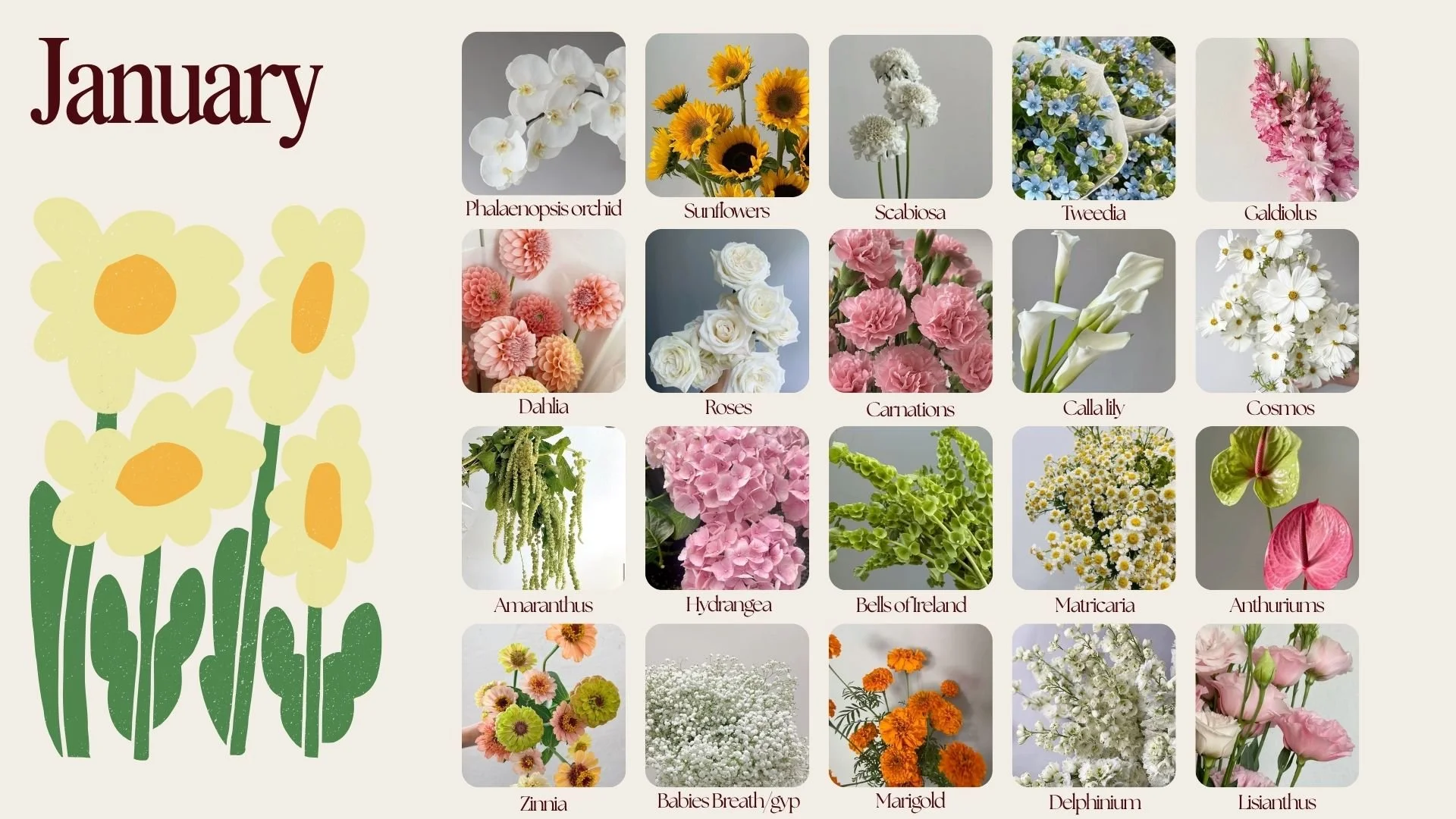
Note - As stated in the blog, some of these are not likely available the first week of January due to closures and delayed freight after New Years.
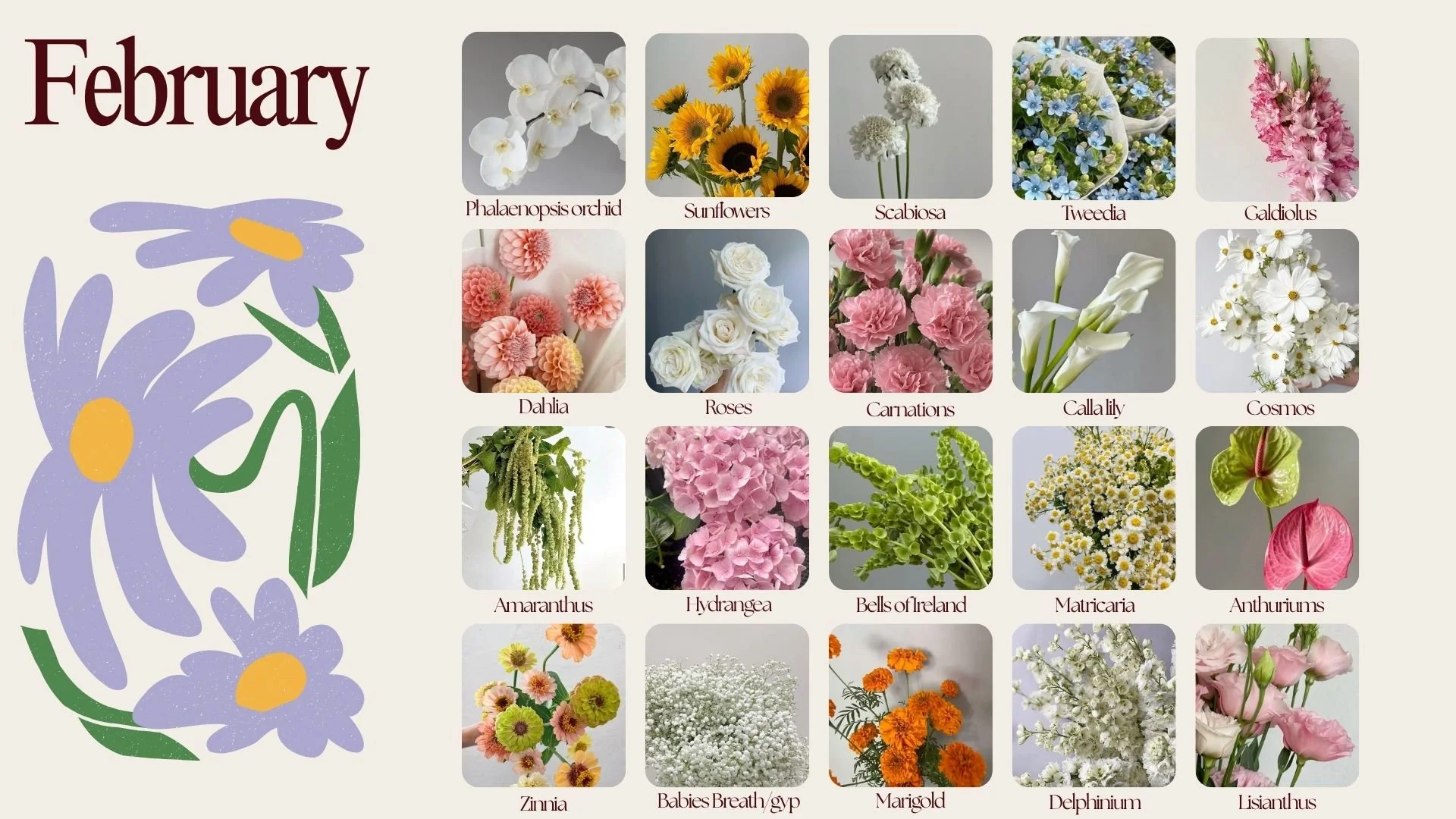
Best month to more likely guarantee those summer favourites.
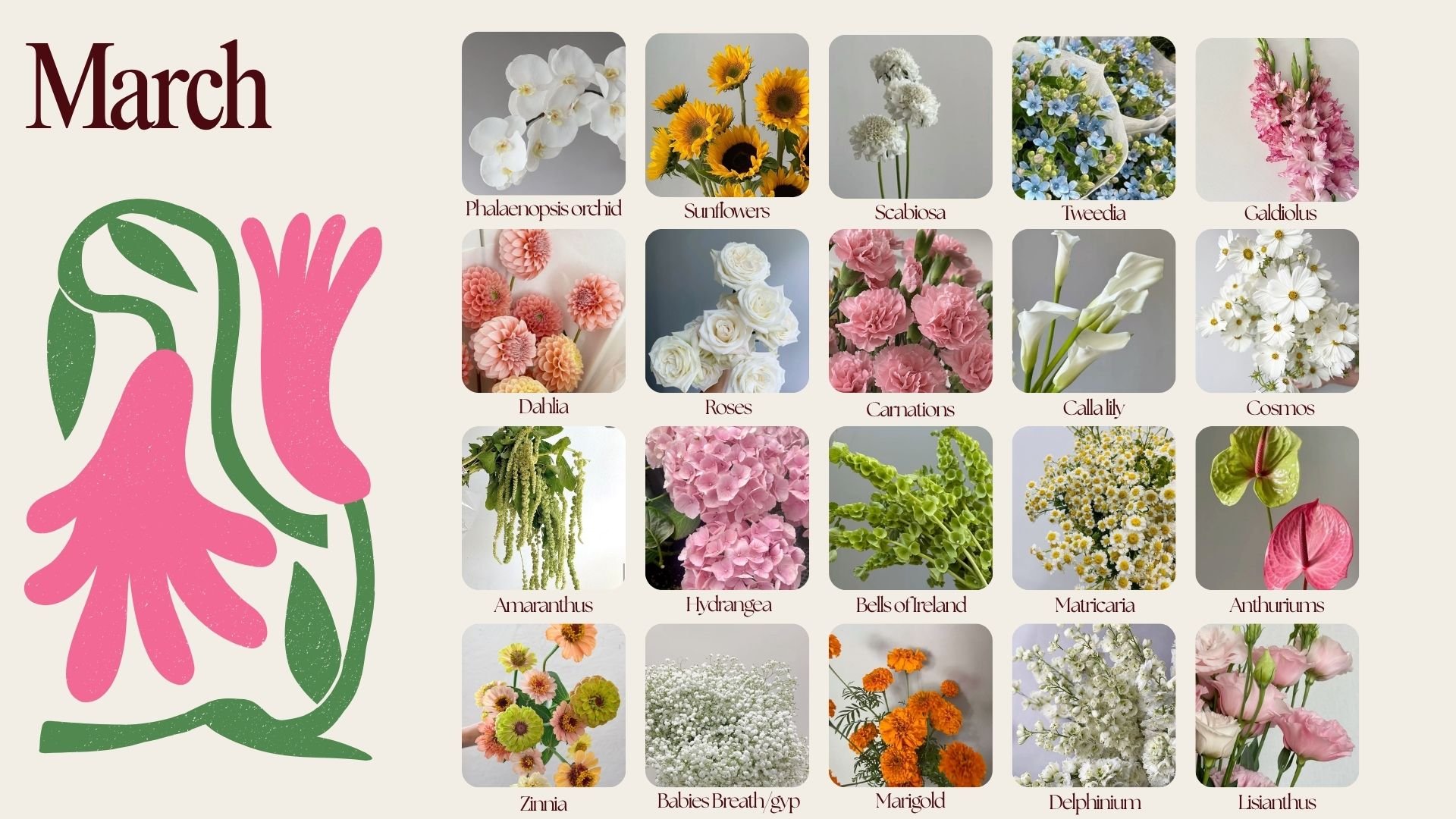
Towards the end of the month you will be looking more like the April selection.
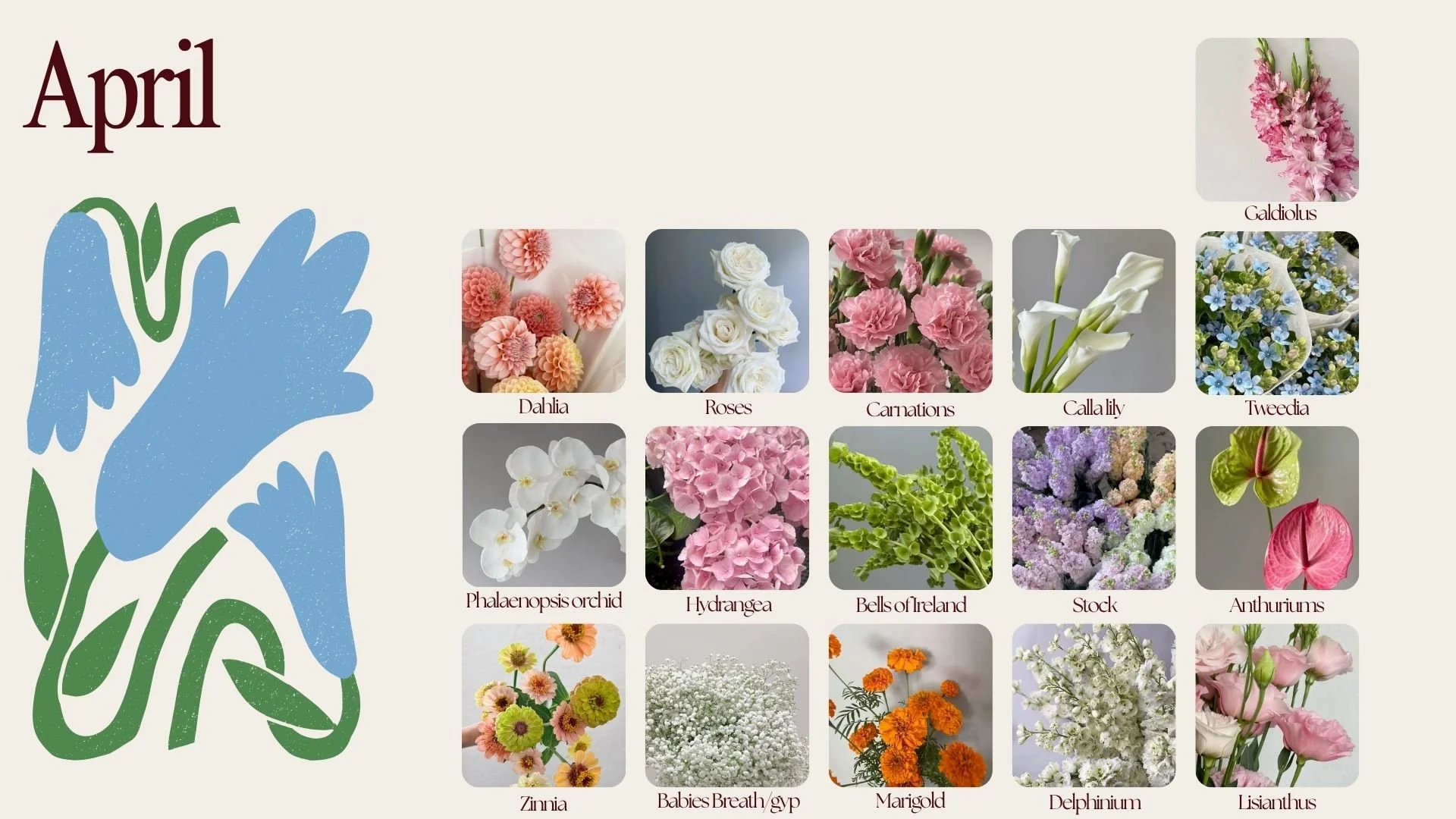
Note - As stated in the blog, some of these like dahlia, zinnia, marigold etc… may be few and far between if there has been an early frost. Hydrangea selection also significantly reduces here, no more light pinks and blues. You’ll be into antique greens, dark blues and purples. Towards the end of the month there may be some early tulips. This can be a difficult month to guarantee types due to the season change, if you are specific about flower varieties choose a different month, before or after depending if you want the winter blooms or the summer blooms.
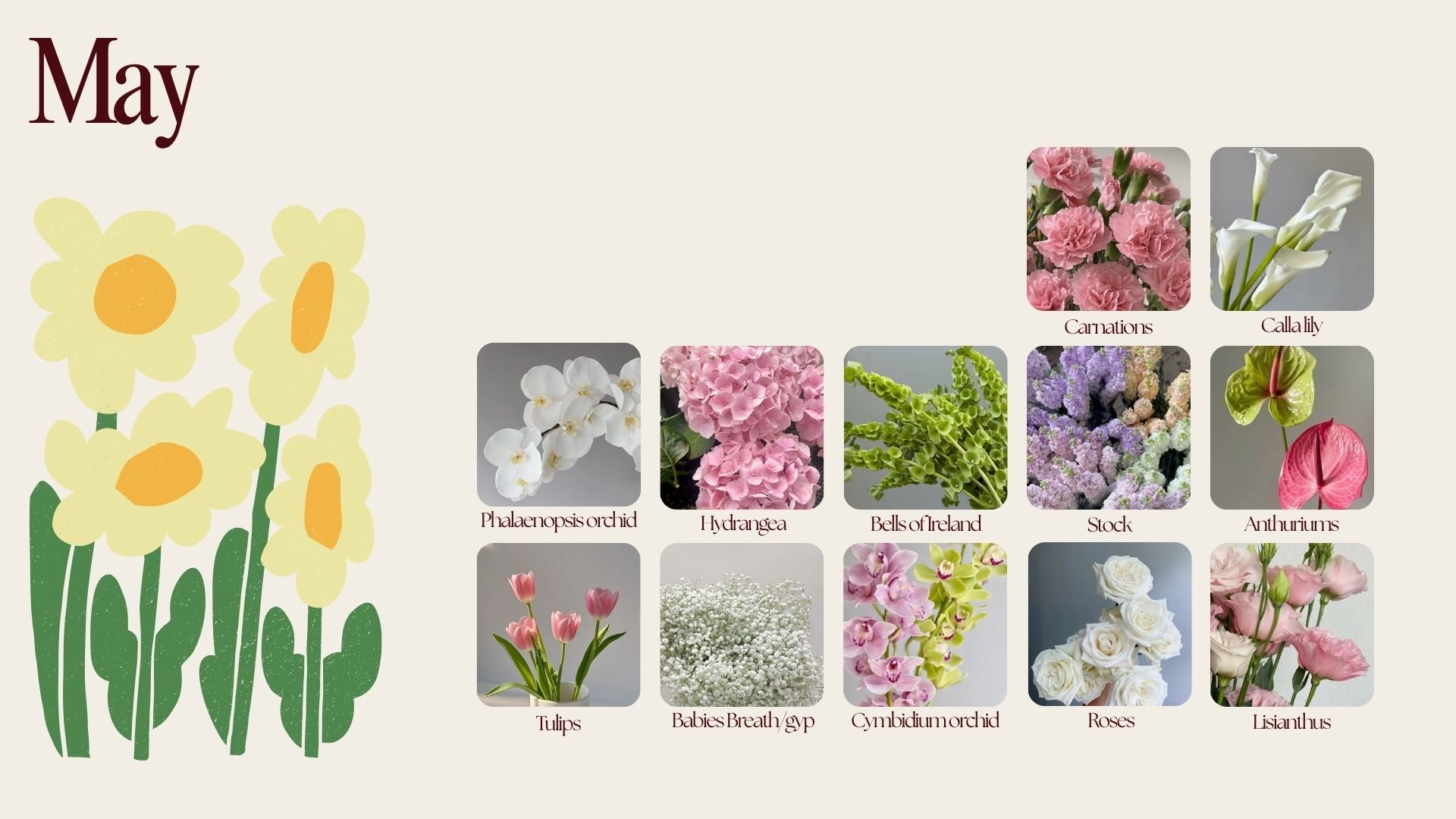
Same as April, Autumn doesnt have any blooms specific to Autumn. It goes from summer blooms to winter blooms. Those antique hydrangea may be around at the beginning of the month but not many and not guaranteeable. Bells of Ireland will also be few and far between for the beginning of the month. Likely none by the end. Cymbidium and tulips will likely have started but not in full flush. Again not an ideal month if you want guaranteed winter blooms, pick June or July for this.
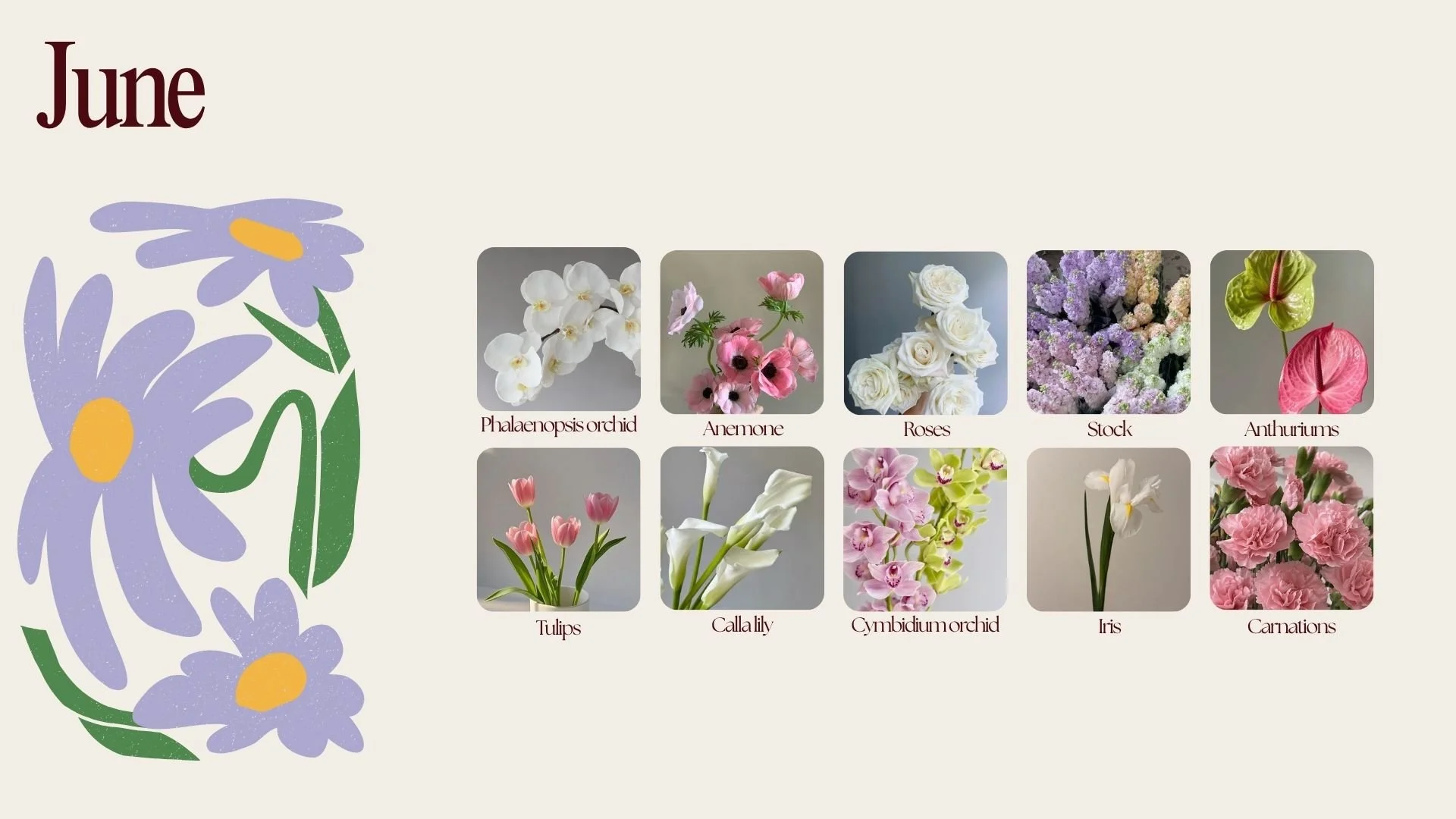
If Winter blooms are what you’re after this is a good month to choose.
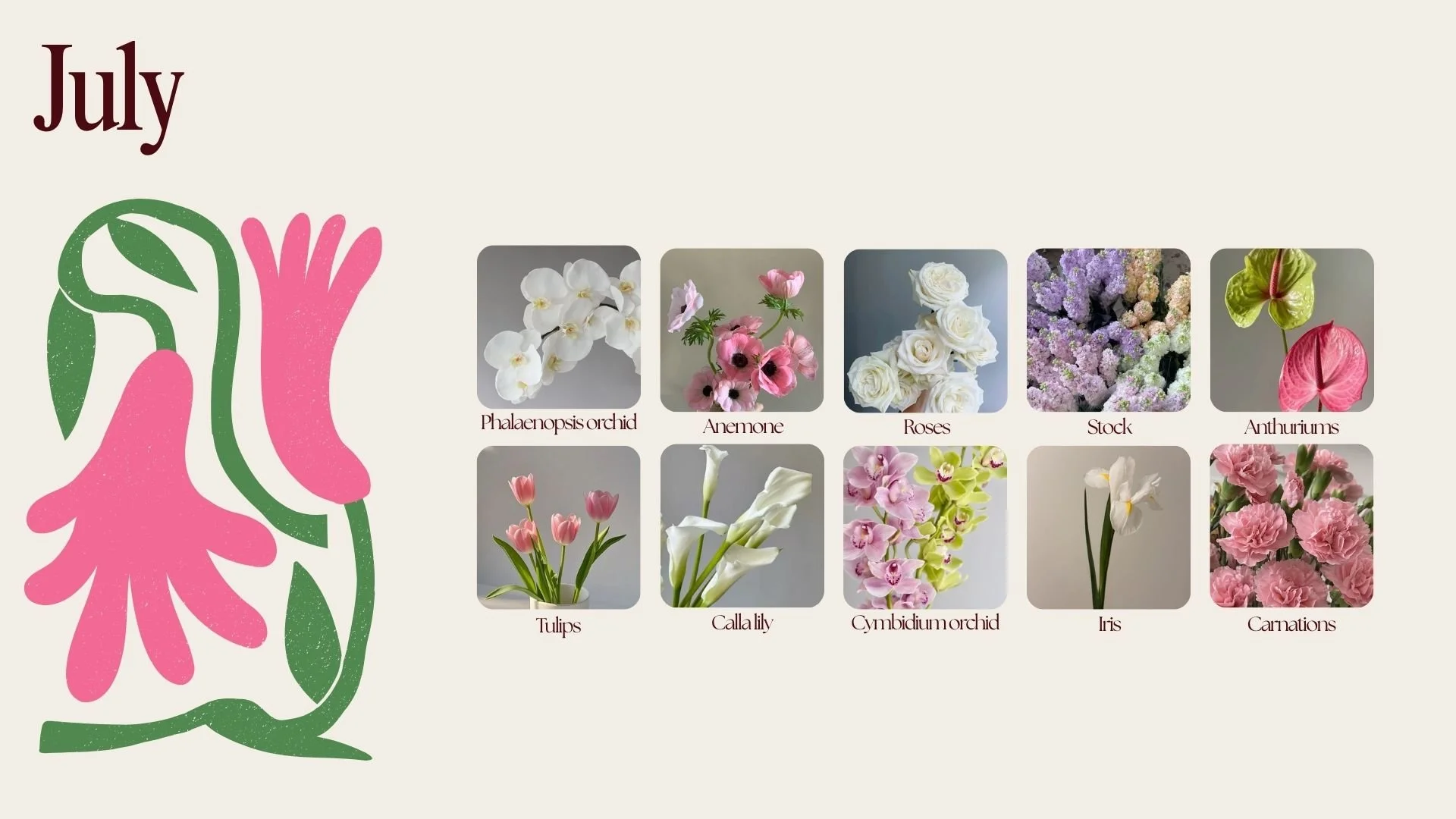
If Winter blooms are what you are after this is a good month to choose.
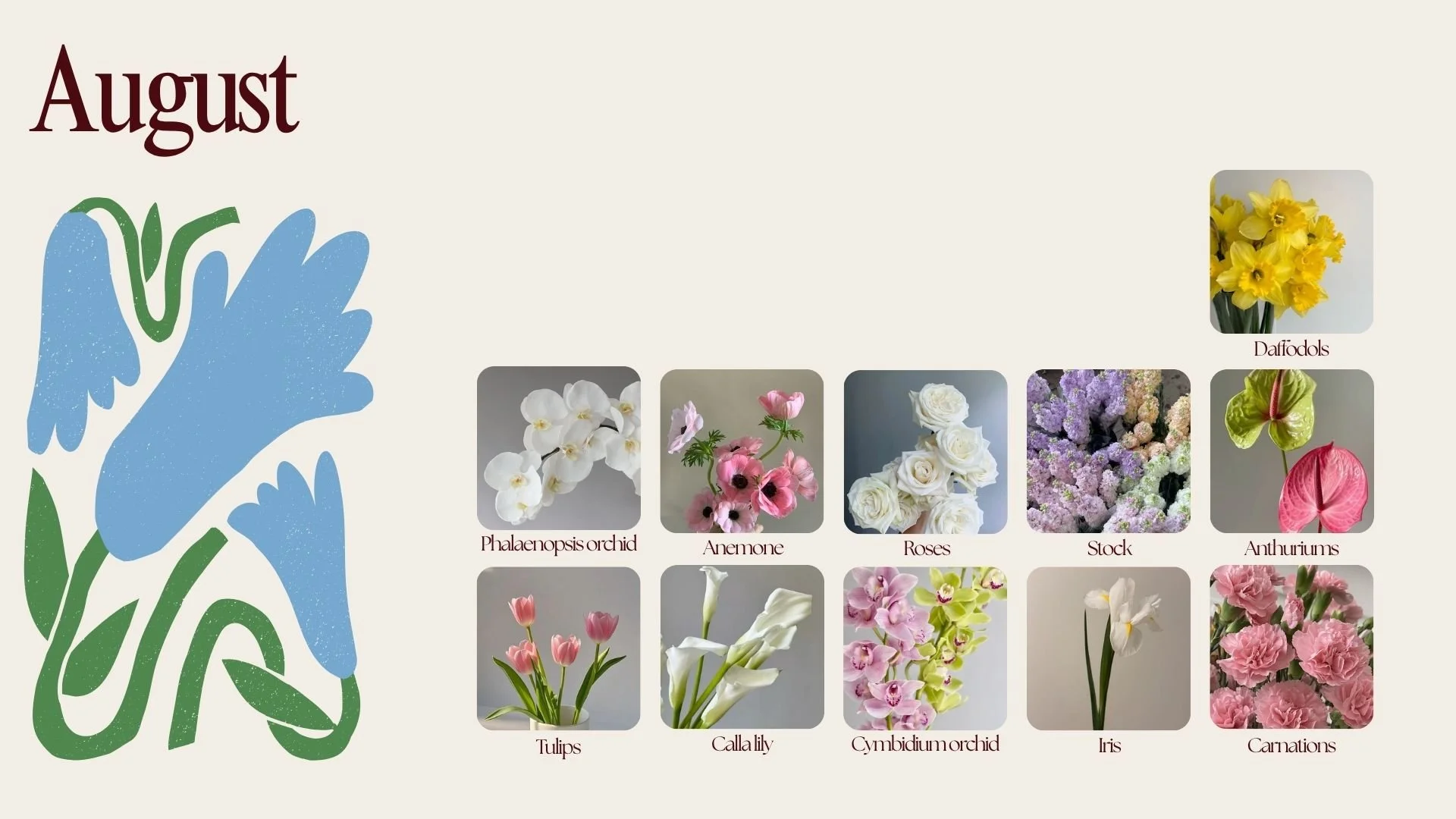
August is another good month for Winter blooms and you may start to be lucky with some early spring flowers but not to be relied upon.
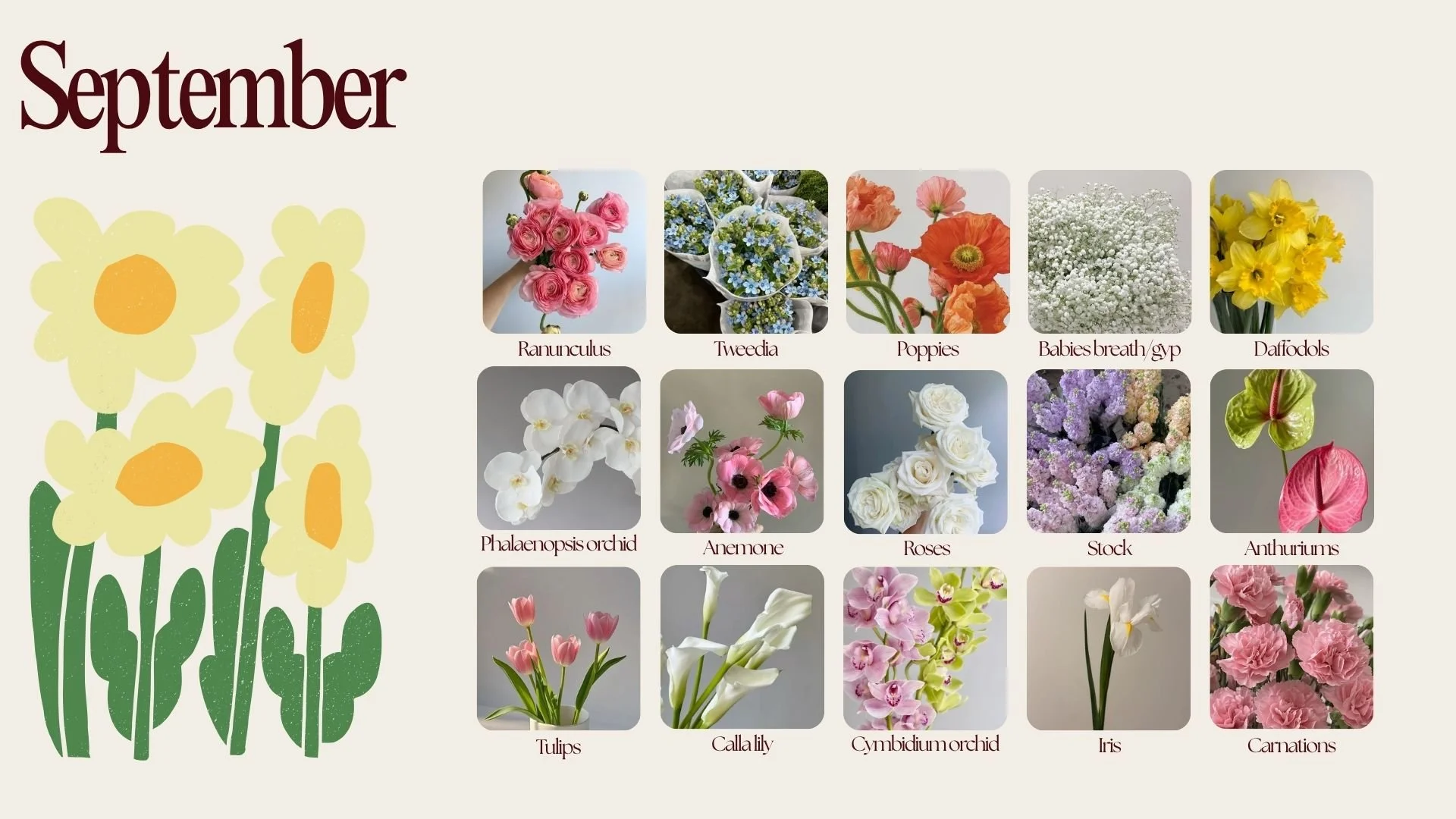
Note- As stated in the blog, this month isn’t ideal if you want spring flowers. Because we are fresh off winter chances are a lot of these haven’t properly started and we get stuck in that winter spring divide.
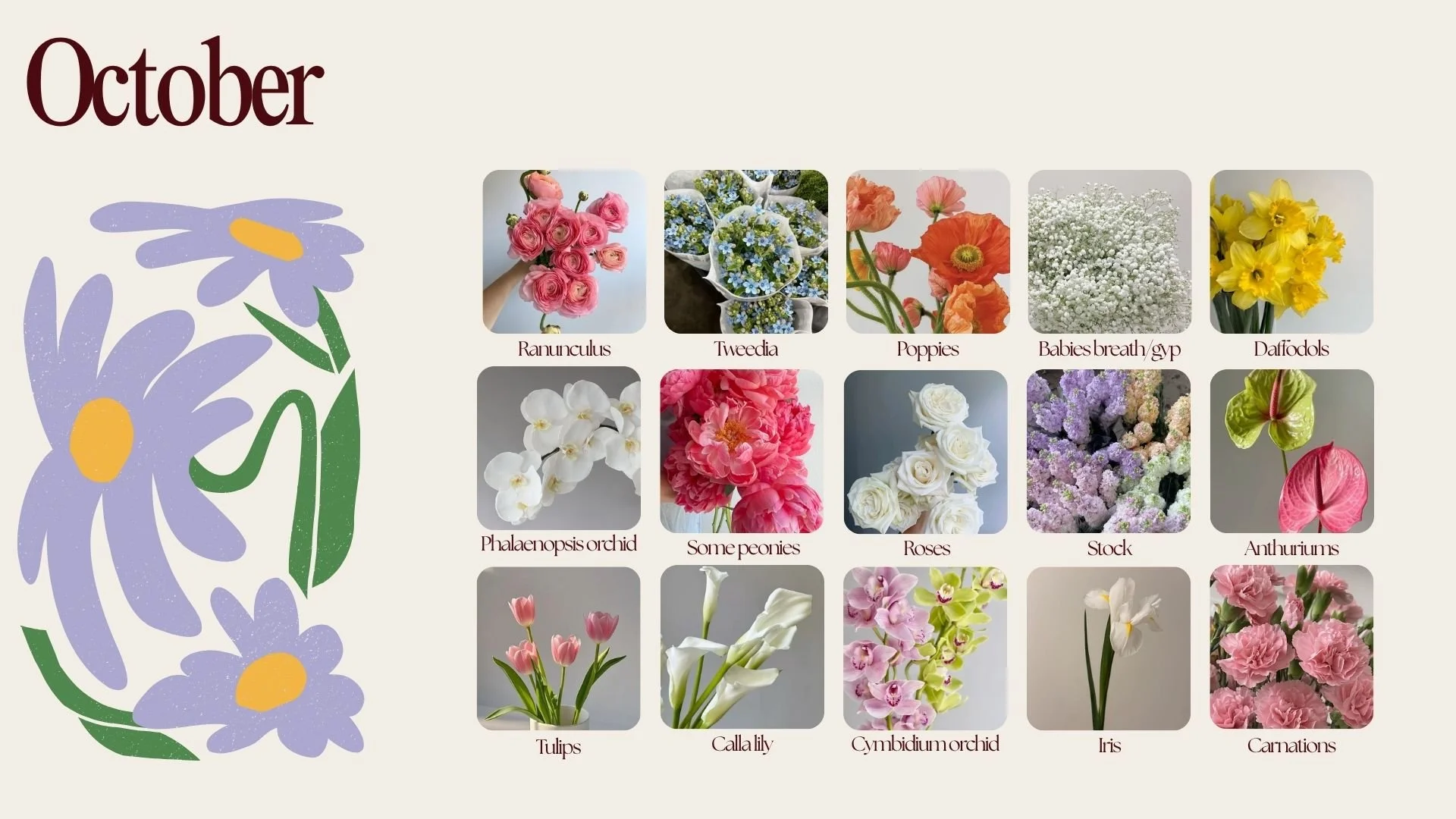
If you are wanting those classic spring blooms mid to end of October are much better chances of having these flowers in full flush. Early to mid November might be the most ideal. However in October you will likely still have some of those winter blooms like the cymbidium orchid and tulips. If you want a mix this is a good month to choose. If you are lucky some pink and coral varieties of peonies have started but you’re not likely to have white or red.
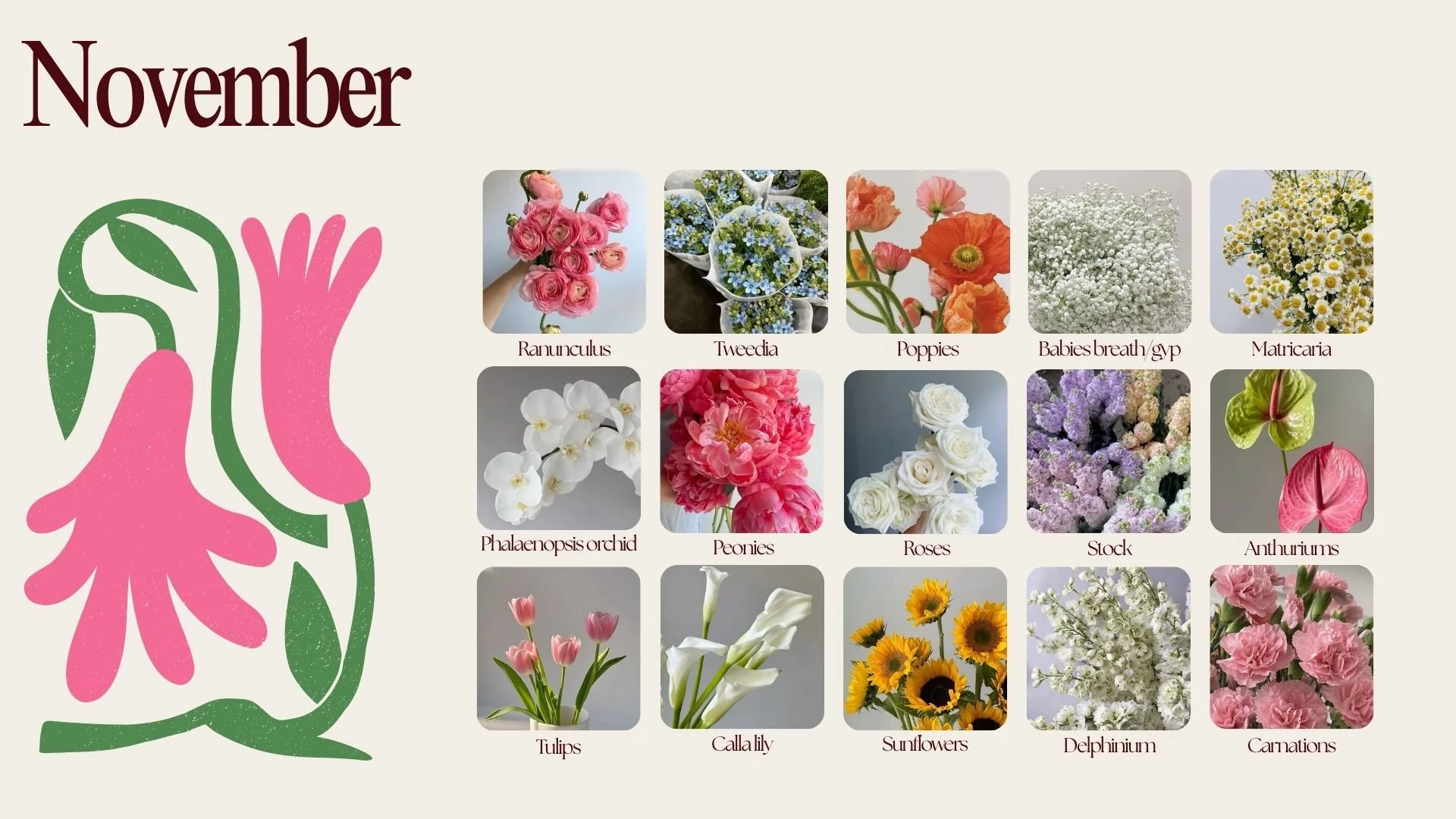
November articularily mid November in my opinion is the perfect balance of those spring blooms and stepping into some of those summery blooms rather than winter. If you love peonies this is the better month for a good selection of colours.
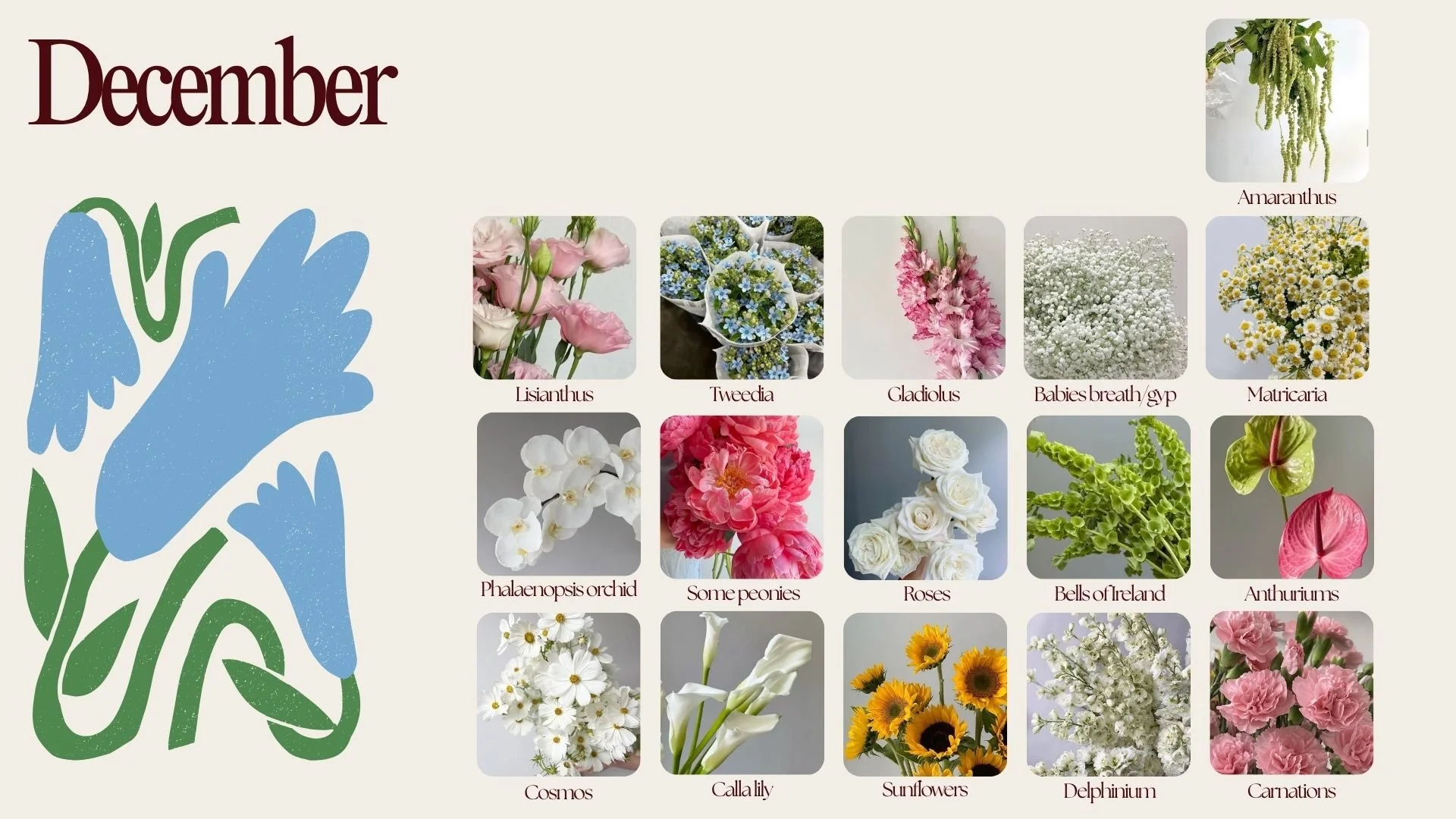
December is summer HOWEVER, most summer blooms arent in full flush until mid January. You wont see dahlia until then, you may get the odd hydrangea however they wont be of their best quality and will be very little numbers and colours. We dont guarantee hydrangea in December. Peonies will finish this month. Some will last up to Christmas but most will be finished by mid December.
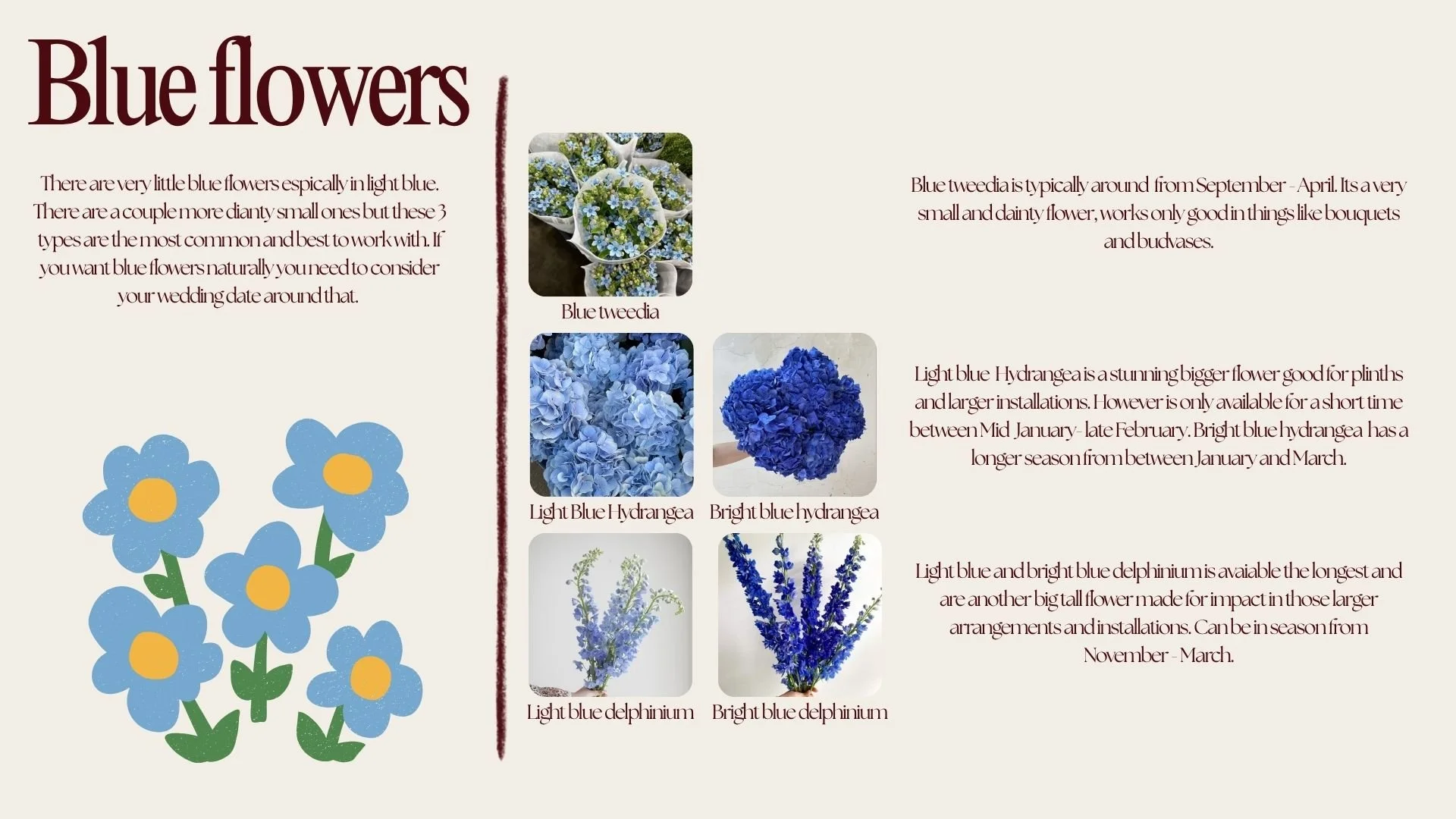
Here what’s to consider if you want bule in your wedding, in particular light blue.